Flugkapitäne, Copiloten und Flugingenieure

Mäßiges Risiko
48%

Wohin möchten Sie als Nächstes gehen?

Oder erkunden Sie diesen Beruf ausführlicher...
AUTOMATISIERUNGSRISIKO
BERECHNET
65%
(Hohes Risiko)
UMFRAGE
31%
(Geringes Risiko, Basierend auf 1.445 Stimmen)
Average: 48%
ARBEITSNACHFRAGE
WACHSTUM
5,0%
bis zum Jahr 2033
LÖHNE
219.140 $
oder 105,35 $ pro Stunde
Volumen
93.670
ab dem 2023
ZUSAMMENFASSUNG
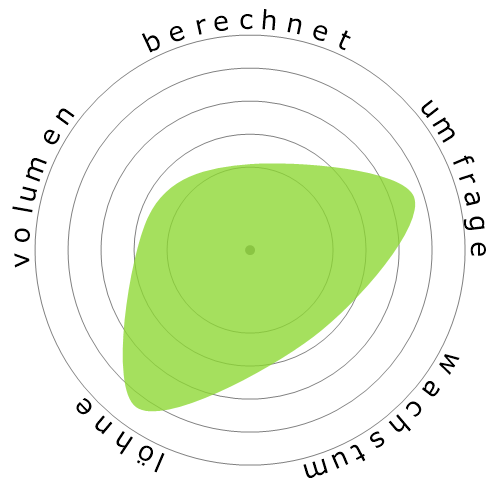
Was zeigt diese Schneeflocke?
Die Schneeflocke ist eine visuelle Zusammenfassung der fünf Abzeichen: Automatisierungsrisiko (berechnet), Risiko (abgefragt), Wachstum, Löhne und Volumen. Sie gibt Ihnen einen sofortigen Überblick über das Profil eines Berufs. Die Farbe der Schneeflocke steht in Beziehung zu ihrer Größe. Je besser der Beruf im Vergleich zu anderen abschneidet, desto größer und grüner wird die Schneeflocke.
ARBEITSPUNKTZAHL
6,3/10
Was ist das?
Jobbewertung (höher ist besser):

Wir bewerten Jobs anhand von vier Faktoren. Diese sind:

- Chance der Automatisierung
- Jobwachstum
- Löhne
- Anzahl der verfügbaren Stellen

Dies sind einige wichtige Punkte, über die man beim Jobsuchen nachdenken sollte.

Personen haben sich auch angesehen

Verkehrspiloten Rechtsanwälte Schauspieler Computerprogrammierer Webentwickler

Berechnetes Automatisierungsrisiko

65% (Hohes Risiko)

Hohes Risiko (61-80%): Arbeitsplätze in dieser Kategorie sind einer erheblichen Bedrohung durch Automatisierung ausgesetzt, da viele ihrer Aufgaben mit aktuellen oder nahen zukünftigen Technologien leicht automatisiert werden können.

Weitere Informationen darüber, was dieser Wert ist und wie er berechnet wird, sind verfügbar hier.

Einige ziemlich wichtige Eigenschaften des Jobs sind schwer zu automatisieren:

  • Manuelle Geschicklichkeit

  • Soziale Wahrnehmungsfähigkeit

  • Fingerfertigkeit

Benutzerumfrage

31% Chance auf vollständige Automatisierung in den nächsten zwei Jahrzehnten

Unsere Besucher haben abgestimmt, dass es eine geringe Chance gibt, dass dieser Beruf automatisiert wird. Die von uns erzeugte Automatisierungsrisikostufe deutet jedoch auf eine viel höhere Wahrscheinlichkeit der Automatisierung hin: 65% Chance auf Automatisierung.

Was denken Sie, ist das Risiko der Automatisierung?

Wie hoch ist die Wahrscheinlichkeit, dass Flugkapitäne, Copiloten und Flugingenieure in den nächsten 20 Jahren durch Roboter oder künstliche Intelligenz ersetzt wird?

Gefühl

Das folgende Diagramm wird angezeigt, wenn genügend Stimmen vorhanden sind, um aussagekräftige Daten zu erzeugen. Es zeigt die Ergebnisse von Nutzerumfragen im Laufe der Zeit und bietet einen klaren Hinweis auf Stimmungstrends.

Gefühlslage über die Zeit (jährlich)

Wachstum

Mäßiges Wachstum im Vergleich zu anderen Berufen

Die Anzahl der 'Airline Pilots, Copilots, and Flight Engineers' Stellenangebote wird voraussichtlich um 5,0% bis 2033 steigen.

Gesamtbeschäftigung und geschätzte Stellenangebote

* Daten des Bureau of Labor Statistics für den Zeitraum zwischen 2023 und 2033
Aktualisierte Prognosen sind fällig 09-2025.

Löhne

Sehr hoch bezahlt im Vergleich zu anderen Berufen

Im Jahr 2023 betrug das mittlere Jahresgehalt für 'Airline Pilots, Copilots, and Flight Engineers' 219.140 $, oder 105 $ pro Stunde.

'Airline Pilots, Copilots, and Flight Engineers' wurden 356,0% höher bezahlt als der nationale Medianlohn, der bei 48.060 $ lag.

Löhne über die Zeit

* Daten vom Bureau of Labor Statistics

Volumen

Mäßiges Spektrum an Arbeitsmöglichkeiten im Vergleich zu anderen Berufen

Ab dem 2023 waren 93.670 Personen als 'Airline Pilots, Copilots, and Flight Engineers' in den Vereinigten Staaten beschäftigt.

Dies entspricht etwa 0,06% der erwerbstätigen Bevölkerung im ganzen Land.

Anders ausgedrückt, ist etwa 1 von 1 Tausend Personen als 'Airline Pilots, Copilots, and Flight Engineers' beschäftigt.

Stellenbeschreibung

Steuern und navigieren Sie den Flug von Starrflügel-Flugzeugen, normalerweise auf festgelegten Flugrouten, für den Transport von Passagieren und Fracht. Erfordert ein Bundesluftverkehrszertifikat und eine Bewertung für den spezifischen Flugzeugtyp, der verwendet wird. Beinhaltet regionale, nationale und internationale Flugzeugpiloten und Fluglehrer von Flugzeugpiloten.

SOC Code: 53-2011.00

Kommentare (86)

Einen Kommentar hinterlassen
John (Niedrig)
05 Dez. 2024 21:56
A computer can only do so many algorithms. Let's say a situation happens and the computer/AI is there to slove the problem and it does.... but what happens when the problem is outside of the box and the algorithm doesn't know what to do. This is where is can turn catastrophic. This is where pilots come in to play and think outside the box plus their fighting for their lives so they will do everything to get home to their families and their passengers also.

20 years it will start with cargo flights.

Another 10 years after maybe commercial flights.

If an accident happens like where two planes go down due to MCAS designed by boeing. This probably set it back years for automation.

Look at Sully landing on the Hudson can a computer do that?

Miracle on the Hudson that was down to skill and knowledge and a brilliant Captain and First Office.
Jayden Hua
14 Juli 2025 18:12
The FAA will not allow this, they wont even allow 1 person only in the cockpit. If it takes 3-5 years in flight school, there's a low possibility that they can replace pilots that need to learn for 5 years.
Mason Braswelle (Keine Chance)
28 Okt. 2024 20:28
The amount of things pilots have to do in order to ensure safe flights is astounding, not to mention that if something were to go wrong, what would the robot even do?
Carson Gill (Niedrig)
12 Jan. 2026 20:48
Within the upcoming years, robots might be developed enough to completely fly planes. Actually, some planes already can. The issue with this is that many people will likely never trust a robot to control something that is thousands of feet in the air because if something were to happen, there would be no professionals to manage the issue or take control if the computer fails.
Pilot | 737 max (Niedrig)
12 Sept. 2025 18:15
That's an airplane! It flies upto 40000ft no one can trust a machine flying airplane, carrying 200+ passengers without pilot... Even auto pilot is in under control of pilot, they are watching it!
Dan (Mäßig)
26 Jan. 2025 16:08
I'm a commercial pilot, I work in the industry for the last 20 years.
Capacity to AI takeover already exist but passanger trust will take longer to be achieved.
rorik
07 Sept. 2024 00:27
consider that nothing manufactured by humans are perfect, with such a reality, you cannot assume that a robot/ai could do it's job flawlessly. there are ethical decisions in emergencies that must be made in the cockpit that an ai simply cannot do. furthermore, redundancy is a core value in aviation, and until human manufacturing is perfect (arguably wont ever be), a pilot will always be needed in the cockpit as a form of redundancy in case the manufactured systems malfunction.
criag (Keine Chance)
02 Juli 2024 00:33
There are many airlines that want soft, silky landings and not slammy, hard, ai- landings
Michael (Höchstwahrscheinlich)
21 Jan. 2023 14:47
AI is advancing rapidly and is on track to replace pilots within 10 years.
Unlikely
16 Juni 2022 05:14
Unlikely for a long time. First of all, there’s the technology which is there. Currently, automation has to be set and monitored by the pilots. It is extremely accurate and does fly the plane better than a person can, but it has limitations.

Most emergencies or abnormal events are known about and there are checklists to deal with them, but not every situation is the same or black and white. My specialty is flying airplanes, not computer science, but I find it hard to imagine current AI being able to properly handle a plane in an emergency, especially if it is a new situation.

There is also public opinion. I don’t like the idea because it takes a lot of jobs away, and I know many others don’t like the idea of a couple of hundred people being flown in an airplane completely controlled by AI.

The FAA is also notoriously slow with changing and adapting the rules. They have plenty of rules that are outdated and strange policies, but most of it is in the interest of safety. They prohibit people from flying unless they meet specific physical and mental health criteria. To my knowledge, pilots aren’t allowed to have any form of mental illness, and can’t take antidepressants or other similar things which could easily be treated.

The point I’m making here is that they’re slow to change and this big change would certainly take a while.
E (I prefer not to say)
10 Sept. 2023 18:48
That's a relief I because I want to be a pilot and to be honest I also don't want an AI flying a plane I'm in on it's own
Michael (Höchstwahrscheinlich)
14 Mai 2022 08:19
Airbus already has an airplane that can fly all phases of flight by itself.
Asher (Niedrig)
26 Apr. 2022 16:23
People aren’t trustworthy of artificial intelligence it could take 50 years+ for them to start being used alone and you’d still need a pilot just in case
Adam (Höchstwahrscheinlich)
20 Apr. 2022 11:54
I think it will be partially automated before fully, but that will have an impact on how many jobs there are by about half. If things can be automated enough to remove the co-pilot, then that will happen first. Then single pilots will be flying from home just like the military flies drones now. Over time, with the increase in AI that can make decisions in real time about outside factors, the planes will become fully automated.
Sean (Keine Chance)
09 Apr. 2022 01:25
Everything moves very, very slowly in the world of aviation. We still use technology from the 90s. There is no way it will be automated in my lifetime.
Thomas ( not yet)
01 Feb. 2022 17:18
The average lifespan of an airliner is 20 years. Even if they started producing fully automated aircraft tomorrow, most of the planes would be manned for many, many years to come.
Joakim (Keine Chance)
05 Okt. 2025 21:50
Because humans will probably be better at decision making and certificaton for full AI control will likely take a long time.
EES (Keine Chance)
11 Mai 2025 14:03
we already have autopilots and they havent been replaced, yes, there is automation, but when the automation is already here and there's still demand for pilots, why would it go away
Jeremy (Niedrig)
09 Okt. 2024 17:42
Although the actual flight operation can be managed by AI, there is always the chance that the AI will fail at controlling the plane. Also there is always different situations for landing and takeoff, AI won't always be able to predict and maneuver the next move.
dan (Niedrig)
07 Sept. 2024 00:22
ask yourself this question, how would you feel if the most beloved person to you was on a plane controlled by a robot that could be hacked, glitch, or malfunction
Captam (Höchstwahrscheinlich)
23 Juni 2023 01:59
The “need for the human touch“ when things “go wrong“ with a flight is arguably correct However this function can be provided perfectly adequately from a remote control room. The human does not need to be sitting in the cockpit. The ability to fly precision drone operarions from control rooms thousands of miles away proves this. Flights can be totally automated but when an abnormality occurs, the controllers (who oversee multiple flights)can be alerted, and intervene renotely if necessaey.
AJ
15 Aug. 2024 20:51
Those are heavy assumptions that there is strong two way communication between the aircraft and the ground station controlling it. Not a lot of the areas that airplanes are flying over will be able to maintain a constant communication (such as war zones, the arctic, or the Atlantic or Pacific Ocean) and before you say GPS keep in mind it works by sending low bit data so that doesn’t exactly work well when complicated or heavy computing conditions exist. Plus if you can control it remotely so can someone else looking to cause trouble.

Hinterlassen Sie eine Antwort zu diesem Beruf
0/8000