Flygbolagspiloter, Andrepiloter och Flygingenjörer

Måttlig Risk
48%

Vart vill du åka härnäst?

Dela dina resultat med vänner och familj.

Eller, utforska detta yrke i större detalj...
RISK FÖR AUTOMATISERING
BERÄKNAD
65%
(Hög Risk)
UNDERSÖKNING
31%
(Låg risk, Baserat på 1 442 röster)
Average: 48%
ARBETSMARKNADSBEHOV
TILLVÄXT
5,0%
från år 2033
LÖNER
219 140 $
eller 105,35 $ per timme
Volym
93 670
från och med 2023
SAMMANFATTNING
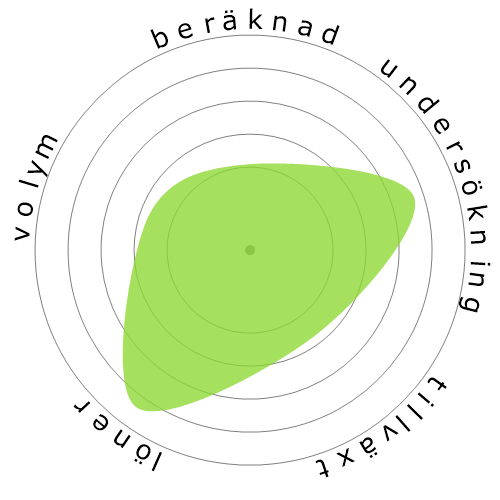
Vad visar denna snöflinga?
Snöflingan är en visuell sammanfattning av de fem emblemerna: Automatiseringsrisk (beräknad), Risk (omröstad), Tillväxt, Löner och Volym. Den ger dig en omedelbar översikt av en yrkesprofil. Snöflingans färg relaterar till dess storlek. Ju bättre yrket presterar i förhållande till andra, desto större och grönare blir Snöflingan.
JOBBPOÄNG
6,3/10
Vad är detta?
Jobbpoäng (högre är bättre):

Vi betygsätter jobb med hjälp av fyra faktorer. Dessa är:

- Risken för att bli automatiserad
- Jobbtillväxt
- Löner
- Volymen av tillgängliga positioner

Dessa är några viktiga saker att tänka på när man söker jobb.

Personer tittade också på

Kommersiella piloter Advokater Datorprogrammerare Skådespelare Webbutvecklare

Beräknad automatiseringsrisk

65% (Hög Risk)

Hög risk (61-80%): Jobb i denna kategori står inför ett betydande hot från automatisering, eftersom många av deras uppgifter lätt kan automatiseras med nuvarande eller nära framtida tekniker.

Mer information om vad detta betyg är, och hur det beräknas finns tillgängligt här.

Vissa ganska viktiga egenskaper hos jobbet är svåra att automatisera:

  • Manuell Fingerfärdighet

  • Social Perceptiveness - Social Förståelse

  • Fingerfärdighet

Användarundersökning

31% procent chans för full automatisering inom de närmaste två decennierna

Våra besökare har röstat att det är en låg chans att detta yrke kommer att automatiseras. Emellertid tyder den automatiseringsrisknivå vi har genererat på en mycket högre chans för automatisering: 65% chans för automatisering.

Vad tror du är risken med automatisering?

Vad är sannolikheten att Flygbolagspiloter, Andrepiloter och Flygingenjörer kommer att ersättas av robotar eller artificiell intelligens inom de närmaste 20 åren?

Känsla

Följande graf visas där det finns tillräckligt med röster för att producera meningsfull data. Den visar användaromröstningsresultat över tid och ger en tydlig indikation på sentimenttrender.

Känslor över tid (årligen)

Tillväxt

Måttlig tillväxt jämfört med andra yrken

Antalet 'Airline Pilots, Copilots, and Flight Engineers' lediga jobb förväntas att öka med 5,0% till 2033

Total sysselsättning och uppskattade jobböppningar

* Data från Bureau of Labor Statistics för perioden mellan 2023 och 2033
Uppdaterade prognoser beräknas 09-2025.

Löner

Mycket högt betald jämfört med andra yrken

I 2023 var den medianårliga lönen för 'Airline Pilots, Copilots, and Flight Engineers' 219 140 $, eller 105 $ per timme.

'Airline Pilots, Copilots, and Flight Engineers' betalades 356,0% högre än den nationella medianlönen, som låg på 48 060 $

Löner över tid

* Data från Byrån för arbetsstatistik

Volym

Måttligt utbud av jobbmöjligheter jämfört med andra yrken

Från och med 2023 var det 93 670 personer anställda som 'Airline Pilots, Copilots, and Flight Engineers' inom USA.

Detta representerar cirka 0,06% av den anställda arbetskraften i hela landet

Sagt på ett annat sätt, runt 1 av 1 tusen personer är anställda som 'Airline Pilots, Copilots, and Flight Engineers'.

Arbetsbeskrivning

Pilotera och navigera flygningen av flygplan med fast vinge, vanligtvis på schemalagda flygbolagsrutter, för transport av passagerare och last. Kräver federalt flygtransportcertifikat och betyg för specifik flygplanstyp som används. Inkluderar regionala, nationella och internationella flygbolagspiloter och flyginstruktörer för flygbolagspiloter.

SOC Code: 53-2011.00

Kommentarer (87)

Lämna en kommentar
John (Låg)
05 dec. 2024 21:56
A computer can only do so many algorithms. Let's say a situation happens and the computer/AI is there to slove the problem and it does.... but what happens when the problem is outside of the box and the algorithm doesn't know what to do. This is where is can turn catastrophic. This is where pilots come in to play and think outside the box plus their fighting for their lives so they will do everything to get home to their families and their passengers also.

20 years it will start with cargo flights.

Another 10 years after maybe commercial flights.

If an accident happens like where two planes go down due to MCAS designed by boeing. This probably set it back years for automation.

Look at Sully landing on the Hudson can a computer do that?

Miracle on the Hudson that was down to skill and knowledge and a brilliant Captain and First Office.
Jayden Hua
14 juli 2025 18:12
The FAA will not allow this, they wont even allow 1 person only in the cockpit. If it takes 3-5 years in flight school, there's a low possibility that they can replace pilots that need to learn for 5 years.
Mason Braswelle (Ingen chans)
28 okt. 2024 20:28
The amount of things pilots have to do in order to ensure safe flights is astounding, not to mention that if something were to go wrong, what would the robot even do?
Carson Gill (Låg)
12 jan. 2026 20:48
Within the upcoming years, robots might be developed enough to completely fly planes. Actually, some planes already can. The issue with this is that many people will likely never trust a robot to control something that is thousands of feet in the air because if something were to happen, there would be no professionals to manage the issue or take control if the computer fails.
Pilot | 737 max (Låg)
12 sep. 2025 18:15
That's an airplane! It flies upto 40000ft no one can trust a machine flying airplane, carrying 200+ passengers without pilot... Even auto pilot is in under control of pilot, they are watching it!
Dan (Måttlig)
26 jan. 2025 16:08
I'm a commercial pilot, I work in the industry for the last 20 years.
Capacity to AI takeover already exist but passanger trust will take longer to be achieved.
rorik
07 sep. 2024 00:27
consider that nothing manufactured by humans are perfect, with such a reality, you cannot assume that a robot/ai could do it's job flawlessly. there are ethical decisions in emergencies that must be made in the cockpit that an ai simply cannot do. furthermore, redundancy is a core value in aviation, and until human manufacturing is perfect (arguably wont ever be), a pilot will always be needed in the cockpit as a form of redundancy in case the manufactured systems malfunction.
criag (Ingen chans)
02 juli 2024 00:33
There are many airlines that want soft, silky landings and not slammy, hard, ai- landings
Michael (Mycket troligt)
21 jan. 2023 14:47
AI is advancing rapidly and is on track to replace pilots within 10 years.
Unlikely
16 juni 2022 05:14
Unlikely for a long time. First of all, there’s the technology which is there. Currently, automation has to be set and monitored by the pilots. It is extremely accurate and does fly the plane better than a person can, but it has limitations.

Most emergencies or abnormal events are known about and there are checklists to deal with them, but not every situation is the same or black and white. My specialty is flying airplanes, not computer science, but I find it hard to imagine current AI being able to properly handle a plane in an emergency, especially if it is a new situation.

There is also public opinion. I don’t like the idea because it takes a lot of jobs away, and I know many others don’t like the idea of a couple of hundred people being flown in an airplane completely controlled by AI.

The FAA is also notoriously slow with changing and adapting the rules. They have plenty of rules that are outdated and strange policies, but most of it is in the interest of safety. They prohibit people from flying unless they meet specific physical and mental health criteria. To my knowledge, pilots aren’t allowed to have any form of mental illness, and can’t take antidepressants or other similar things which could easily be treated.

The point I’m making here is that they’re slow to change and this big change would certainly take a while.
E (I prefer not to say)
10 sep. 2023 18:48
That's a relief I because I want to be a pilot and to be honest I also don't want an AI flying a plane I'm in on it's own
Michael (Mycket troligt)
14 maj 2022 08:19
Airbus already has an airplane that can fly all phases of flight by itself.
Asher (Låg)
26 apr. 2022 16:23
People aren’t trustworthy of artificial intelligence it could take 50 years+ for them to start being used alone and you’d still need a pilot just in case
Adam (Mycket troligt)
20 apr. 2022 11:54
I think it will be partially automated before fully, but that will have an impact on how many jobs there are by about half. If things can be automated enough to remove the co-pilot, then that will happen first. Then single pilots will be flying from home just like the military flies drones now. Over time, with the increase in AI that can make decisions in real time about outside factors, the planes will become fully automated.
Sean (Ingen chans)
09 apr. 2022 01:25
Everything moves very, very slowly in the world of aviation. We still use technology from the 90s. There is no way it will be automated in my lifetime.
Thomas ( not yet)
01 feb. 2022 17:18
The average lifespan of an airliner is 20 years. Even if they started producing fully automated aircraft tomorrow, most of the planes would be manned for many, many years to come.
Joakim (Ingen chans)
05 okt. 2025 21:50
Because humans will probably be better at decision making and certificaton for full AI control will likely take a long time.
EES (Ingen chans)
11 maj 2025 14:03
we already have autopilots and they havent been replaced, yes, there is automation, but when the automation is already here and there's still demand for pilots, why would it go away
Jeremy (Låg)
09 okt. 2024 17:42
Although the actual flight operation can be managed by AI, there is always the chance that the AI will fail at controlling the plane. Also there is always different situations for landing and takeoff, AI won't always be able to predict and maneuver the next move.
dan (Låg)
07 sep. 2024 00:22
ask yourself this question, how would you feel if the most beloved person to you was on a plane controlled by a robot that could be hacked, glitch, or malfunction
Captam (Mycket troligt)
23 juni 2023 01:59
The “need for the human touch“ when things “go wrong“ with a flight is arguably correct However this function can be provided perfectly adequately from a remote control room. The human does not need to be sitting in the cockpit. The ability to fly precision drone operarions from control rooms thousands of miles away proves this. Flights can be totally automated but when an abnormality occurs, the controllers (who oversee multiple flights)can be alerted, and intervene renotely if necessaey.
AJ
15 aug. 2024 20:51
Those are heavy assumptions that there is strong two way communication between the aircraft and the ground station controlling it. Not a lot of the areas that airplanes are flying over will be able to maintain a constant communication (such as war zones, the arctic, or the Atlantic or Pacific Ocean) and before you say GPS keep in mind it works by sending low bit data so that doesn’t exactly work well when complicated or heavy computing conditions exist. Plus if you can control it remotely so can someone else looking to cause trouble.

Lämna ett svar om detta yrke
0/8000