Richter, Amtsrichter und Magistrate

Geringes Risiko
23%

Wohin möchten Sie als Nächstes gehen?

Oder erkunden Sie diesen Beruf ausführlicher...
AUTOMATISIERUNGSRISIKO
BERECHNET
18%
(Minimales Risiko)
UMFRAGE
27%
(Geringes Risiko, Basierend auf 325 Stimmen)
Average: 23%
ARBEITSNACHFRAGE
WACHSTUM
3,4%
bis zum Jahr 2033
LÖHNE
148.910 $
oder 71,59 $ pro Stunde
Volumen
24.470
ab dem 2023
ZUSAMMENFASSUNG
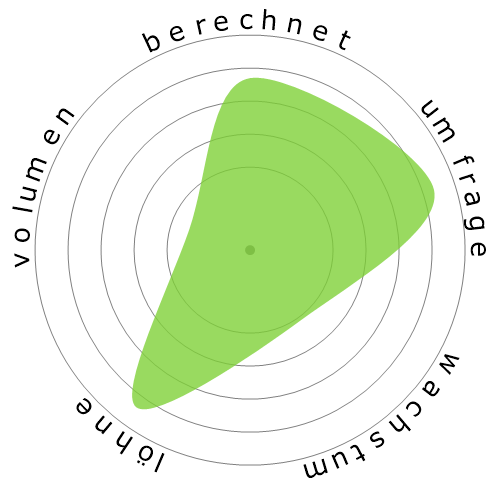
Was zeigt diese Schneeflocke?
Die Schneeflocke ist eine visuelle Zusammenfassung der fünf Abzeichen: Automatisierungsrisiko (berechnet), Risiko (abgefragt), Wachstum, Löhne und Volumen. Sie gibt Ihnen einen sofortigen Überblick über das Profil eines Berufs. Die Farbe der Schneeflocke steht in Beziehung zu ihrer Größe. Je besser der Beruf im Vergleich zu anderen abschneidet, desto größer und grüner wird die Schneeflocke.
ARBEITSPUNKTZAHL
7,0/10
Was ist das?
Jobbewertung (höher ist besser):

Wir bewerten Jobs anhand von vier Faktoren. Diese sind:

- Chance der Automatisierung
- Jobwachstum
- Löhne
- Anzahl der verfügbaren Stellen

Dies sind einige wichtige Punkte, über die man beim Jobsuchen nachdenken sollte.

Personen haben sich auch angesehen

Rechtsanwälte Hochschullehrer Köche und Küchenchefs Postboten Schauspieler

Berechnetes Automatisierungsrisiko

18% (Minimales Risiko)

Minimales Risiko (0-20%): Berufe in dieser Kategorie haben eine geringe Wahrscheinlichkeit, automatisiert zu werden, da sie in der Regel komplexe Problemlösungen, Kreativität, starke zwischenmenschliche Fähigkeiten und ein hohes Maß an manueller Geschicklichkeit erfordern. Diese Jobs beinhalten oft komplexe Handbewegungen und präzise Koordination, was es für Maschinen schwierig macht, die erforderlichen Aufgaben zu replizieren.

Weitere Informationen darüber, was dieser Wert ist und wie er berechnet wird, sind verfügbar hier.

Einige sehr wichtige Eigenschaften des Jobs sind schwer zu automatisieren:

  • Soziale Wahrnehmungsfähigkeit

Einige ziemlich wichtige Eigenschaften des Jobs sind schwer zu automatisieren:

  • Verhandlung

  • Originalität

  • Überzeugung

Benutzerumfrage

27% Chance auf vollständige Automatisierung in den nächsten zwei Jahrzehnten

Unsere Besucher haben abgestimmt, dass es eine geringe Chance gibt, dass dieser Beruf automatisiert wird. Diese Einschätzung wird weiterhin durch das berechnete Automatisierungsrisiko unterstützt, welches eine 18% Chance der Automatisierung schätzt.

Was denken Sie, ist das Risiko der Automatisierung?

Wie hoch ist die Wahrscheinlichkeit, dass Richter, Amtsrichter und Magistrate in den nächsten 20 Jahren durch Roboter oder künstliche Intelligenz ersetzt wird?

Gefühl

Das folgende Diagramm wird angezeigt, wenn genügend Stimmen vorhanden sind, um aussagekräftige Daten zu erzeugen. Es zeigt die Ergebnisse von Nutzerumfragen im Laufe der Zeit und bietet einen klaren Hinweis auf Stimmungstrends.

Gefühlslage über die Zeit (jährlich)

Wachstum

Mäßiges Wachstum im Vergleich zu anderen Berufen

Die Anzahl der 'Judges, Magistrate Judges, and Magistrates' Stellenangebote wird voraussichtlich um 3,4% bis 2033 steigen.

Gesamtbeschäftigung und geschätzte Stellenangebote

* Daten des Bureau of Labor Statistics für den Zeitraum zwischen 2023 und 2033
Aktualisierte Prognosen sind fällig 09-2025.

Löhne

Sehr hoch bezahlt im Vergleich zu anderen Berufen

Im Jahr 2023 betrug das mittlere Jahresgehalt für 'Judges, Magistrate Judges, and Magistrates' 148.910 $, oder 72 $ pro Stunde.

'Judges, Magistrate Judges, and Magistrates' wurden 209,8% höher bezahlt als der nationale Medianlohn, der bei 48.060 $ lag.

Löhne über die Zeit

* Daten vom Bureau of Labor Statistics

Volumen

Geringeres Spektrum an Arbeitsmöglichkeiten im Vergleich zu anderen Berufen

Ab dem 2023 waren 24.470 Personen als 'Judges, Magistrate Judges, and Magistrates' in den Vereinigten Staaten beschäftigt.

Dies entspricht etwa < 0,001% der erwerbstätigen Bevölkerung im ganzen Land.

Anders ausgedrückt, ist etwa 1 von 6 Tausend Personen als 'Judges, Magistrate Judges, and Magistrates' beschäftigt.

Stellenbeschreibung

Schlichten, beraten, urteilen oder Recht sprechen in einem Gericht. Kann den Angeklagten in Strafsachen gemäß Regierungsstatuten oder Strafzumessungsrichtlinien verurteilen. Kann die Haftung des Angeklagten in Zivilsachen feststellen. Kann Hochzeitszeremonien durchführen.

SOC Code: 23-1023.00

Kommentare (17)

Einen Kommentar hinterlassen
Sinus46 (Keine Chance)
24 Aug. 2025 16:43
This would be a stark violation of due process and rule of law. No liberal democracy can allow this.
David Lee (Höchstwahrscheinlich)
04 Nov. 2024 16:32
Most of the Judges work is determining the outcome of a case, using the factual similarities with other cases verdict. This is repetitive work.
Infernus (Niedrig)
29 Okt. 2024 23:59
Because Robots cant understand and have empathy, only logic
Exactlyyyy (Keine Chance)
01 Juli 2024 19:43
You need to have empathy and be humane in addition to understanding the law itself. I also dont think society would allow a computer to pass a verdict.
Y (Unsicher)
06 Juli 2022 02:45
I think it really just depends on our ethics. We could either go dystopic or continue to be semi-nice humans.
Rei (Keine Chance)
20 Apr. 2022 13:22
Unless AI can develop what you call "feeling", "empathy", and "decisiveness", it's quite hard to change how judges work. The job is not only about guilty or not, or who is right, but also about how the people around your place evaluate what is a crime and what is right.
I ate your burger that you left in the fridge (Unsicher)
18 Aug. 2021 17:10
Honestly, I'm leaning towards no, but I'm already seeing some robot lawyers. And if lawyers are replaced, won't judges be replaced as well? But yet again, judges make laws. And it is a bit hard to imagine a robot making laws.
N (Small Chance)
28 Mai 2021 14:10
I don't think judges will be replaced by AI/robots. Like someone else said, judges do not only follow laws, they also help make them. Imagine a robot help make a law, it's hard to imagine for me. I also feel that sure, technology will improve later, and robots will be more like humans, and possibly be better than many of them. But I feel like judges are in an OKAY, spot.
john (Höchstwahrscheinlich)
07 Mai 2021 04:18
At least a robot will be impartial and cannot be bribed
marc (Niedrig)
28 Apr. 2021 18:13
Sentencing is grounded on choice.
K (Niedrig)
05 Sept. 2020 09:11
small chance because when judges will be automated then lawyer need to be automated
Darp (Keine Chance)
29 Jan. 2020 19:48
Why are you argumenting the percentage with the grey area of the job? It's an argument for why they won't be replaced in my opinion. Just imagine a drug dealer and a person having the drug because they believe it would help their dying grandmother, how can they both serve the same sentance for possesion?
Judgemental (Höchstwahrscheinlich)
23 Sept. 2019 20:32
Judges are people who have prejudices based upon experience and are unconsciously biased. The same case tried by all judges would never produce the same outcome. It’s a flawed system, and a lottery. Good luck to those who are innocent and falsely accused.
jac
28 Mai 2019 22:45
judges dont just follow laws. they change laws and base decisions on moral grey area and circumstance. perhaps traffic court will have robot judges but i doubt we will ever see a robot in federal or supreme courts. mercy, compassion, and social understanding should never be expected from a machine.
Elliott (Höchstwahrscheinlich)
21 Apr. 2019 10:34
Laws are very easy to interpret, I'm very sure the Internet already has the answer to 99.9% of all questions regarding whether something should be categorized as a felony or not. The United States has made up its mind on almost everything, I don't think judges really use their imagination to do this job, they just follow instructions as guided in the rules book.That's why I think the chances are much higher than 40%. That's why I think the judges' probability of automation is closer to 95% than 40%, much like the accountants.
Legal Services (Extremely unlikely)
06 Aug. 2019 10:25
Laws by definition are not very easy to interpret. Hence the necessity to have lawyers and Judges deliberate in court over the interpretation of different laws and Acts and is why, for example, in Australia we have the Acts Interpretation Act. I agree with jac. I think it's highly unlikely Judges will be replaced by robots/A.I. anytime in the near or distant future if at all not only because of the complicated nature of what their jobs entails, secondly, the human touch required to do so as jac touched upon and, thirdly, because on a deeper, more philosophical but also more tantamount level, to do so would, essentially, be surrendering our core and fundamental power as human beings to govern our own kind. If we were to hand over judiciary powers and control to A.I. we would effectively be putting mankind on the bench forever. It would tear the core fabric of our humanity and everything the human race has achieved thus far in all antiquity and hopes to achieve in all future and for those reasons and more, I believe, simply could not and would not ever happen. So, realistically, I think the automation risk level of this particular category should be reassessed to almost zero because anyone in their right mind with any semblance of logic and understanding of the justice system couldn't possibly surmise that it could realistically be awarded a percentile score that such could happen higher than that.
Louie
24 Dez. 2025 08:45
So professional

Hinterlassen Sie eine Antwort zu diesem Beruf
0/8000