Piloti di Linea Aerea, Copiloti e Ingegneri di Volo

Rischio Moderato
48%

Dove Vorresti Andare Prossimamente?

Condividi i tuoi risultati con amici e familiari.

Oppure, esplora questa professione in maggiore dettaglio...
RISCHIO DI AUTOMAZIONE
CALCOLATO
65%
(Alto Rischio)
SONDAGGI
31%
(Rischio Basso, Basato su 1.442 voti)
Average: 48%
DOMANDA DI LAVORO
CRESCITA
5,0%
entro l'anno 2033
SALARI
219.140 $
o 105,35 $ all'ora
Volume
93.670
a partire da 2023
SOMMARIO
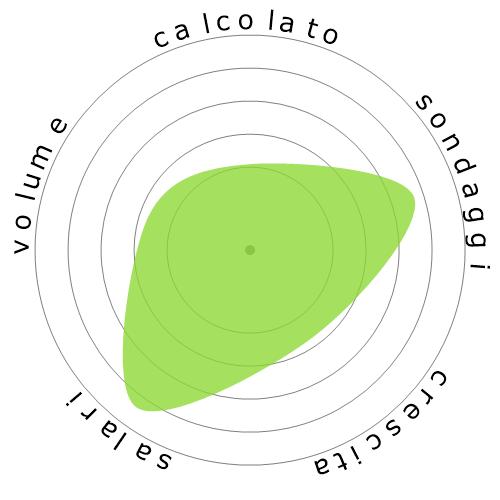
Cosa mostra questo fiocco di neve?
Il Fiocco di Neve è un riepilogo visivo dei cinque distintivi: Rischio di Automazione (calcolato), Rischio (interrogato), Crescita, Salari e Volume. Ti fornisce un'istantanea immediata del profilo di un'occupazione. Il colore del Fiocco di Neve è correlato alla sua dimensione. Più un'occupazione ottiene un punteggio alto rispetto alle altre, più il Fiocco di Neve diventa grande e verde.
PUNTEGGIO LAVORO
6,3/10
Cos'è questo?
Punteggio del lavoro (più alto è meglio):

Valutiamo i lavori utilizzando quattro fattori. Questi sono:

- Possibilità di essere automatizzati
- Crescita del lavoro
- Salari
- Volume di posizioni disponibili

Questi sono alcuni aspetti chiave da considerare quando si cerca un lavoro.

Le persone hanno anche visualizzato

Piloti Commerciali Avvocati Attori Programmatori di Computer Sviluppatori Web

Rischio di automazione calcolato

65% (Alto Rischio)

Rischio Alto (61-80%): Le professioni in questa categoria affrontano una minaccia significativa dall'automazione, poiché molte delle loro attività possono essere facilmente automatizzate utilizzando le tecnologie attuali o di prossima generazione.

Ulteriori informazioni su cosa sia questo punteggio e su come viene calcolato sono disponibili qui.

Alcune qualità piuttosto importanti del lavoro sono difficili da automatizzare:

  • Destrezza Manuale

  • Percezione Sociale

  • Destrezza delle Dita

Sondaggio degli utenti

31% possibilità di completa automazione nel prossimo ventennio

I nostri visitatori hanno votato che c'è una bassa probabilità che questa professione sarà automatizzata. Tuttavia, il livello di rischio di automazione che abbiamo generato suggerisce una possibilità di automazione molto più alta: 65% possibilità di automazione.

Cosa pensi sia il rischio dell'automazione?

Qual è la probabilità che Piloti di Linea Aerea, Copiloti e Ingegneri di Volo venga sostituito da robot o intelligenza artificiale nei prossimi 20 anni?

Sentimento

Il seguente grafico viene mostrato dove ci sono abbastanza voti per produrre dati significativi. Visualizza i risultati dei sondaggi degli utenti nel tempo, fornendo un'indicazione chiara delle tendenze di sentimento.

Sentimento nel tempo (annuale)

Crescita

Crescita moderata rispetto ad altre professioni

Il numero di offerte di lavoro per 'Airline Pilots, Copilots, and Flight Engineers' dovrebbe aumentare 5,0% entro il 2033

Occupazione totale e stime delle offerte di lavoro

* Dati provenienti dal Bureau of Labor Statistics per il periodo tra 2023 e 2033
Le previsioni aggiornate sono previste per 09-2025.

Salari

Molto ben retribuito rispetto ad altre professioni

Nel 2023, il salario annuo mediano per 'Airline Pilots, Copilots, and Flight Engineers' era di 219.140 $, o 105 $ all'ora.

'Airline Pilots, Copilots, and Flight Engineers' hanno ricevuto un salario 356,0% superiore al salario mediano nazionale, che si attestava a 48.060 $

Salari nel tempo

* Dati provenienti dal Bureau of Labor Statistics

Volume

Gamma moderata di opportunità lavorative rispetto ad altre professioni

A partire dal 2023 c'erano 93.670 persone impiegate come 'Airline Pilots, Copilots, and Flight Engineers' negli Stati Uniti.

Questo rappresenta circa il 0,06% della forza lavoro impiegata in tutto il paese

In altre parole, circa 1 su 1 mille persone sono impiegate come 'Airline Pilots, Copilots, and Flight Engineers'.

Descrizione del lavoro

Pilote e naviga il volo di aeromobili a ala fissa, solitamente su rotte di trasporto aereo programmato, per il trasporto di passeggeri e merci. Richiede il certificato di Trasporto Aereo Federale e la valutazione per il tipo specifico di aeromobile utilizzato. Include piloti di compagnie aeree regionali, nazionali e internazionali e istruttori di volo di piloti di compagnie aeree.

SOC Code: 53-2011.00

Commenti (87)

Lascia un commento
John (Basso)
05 dic 2024 21:56
A computer can only do so many algorithms. Let's say a situation happens and the computer/AI is there to slove the problem and it does.... but what happens when the problem is outside of the box and the algorithm doesn't know what to do. This is where is can turn catastrophic. This is where pilots come in to play and think outside the box plus their fighting for their lives so they will do everything to get home to their families and their passengers also.

20 years it will start with cargo flights.

Another 10 years after maybe commercial flights.

If an accident happens like where two planes go down due to MCAS designed by boeing. This probably set it back years for automation.

Look at Sully landing on the Hudson can a computer do that?

Miracle on the Hudson that was down to skill and knowledge and a brilliant Captain and First Office.
Jayden Hua
14 lug 2025 18:12
The FAA will not allow this, they wont even allow 1 person only in the cockpit. If it takes 3-5 years in flight school, there's a low possibility that they can replace pilots that need to learn for 5 years.
Mason Braswelle (Nessuna possibilità)
28 ott 2024 20:28
The amount of things pilots have to do in order to ensure safe flights is astounding, not to mention that if something were to go wrong, what would the robot even do?
Carson Gill (Basso)
12 gen 2026 20:48
Within the upcoming years, robots might be developed enough to completely fly planes. Actually, some planes already can. The issue with this is that many people will likely never trust a robot to control something that is thousands of feet in the air because if something were to happen, there would be no professionals to manage the issue or take control if the computer fails.
Pilot | 737 max (Basso)
12 set 2025 18:15
That's an airplane! It flies upto 40000ft no one can trust a machine flying airplane, carrying 200+ passengers without pilot... Even auto pilot is in under control of pilot, they are watching it!
Dan (Moderato)
26 gen 2025 16:08
I'm a commercial pilot, I work in the industry for the last 20 years.
Capacity to AI takeover already exist but passanger trust will take longer to be achieved.
rorik
07 set 2024 00:27
consider that nothing manufactured by humans are perfect, with such a reality, you cannot assume that a robot/ai could do it's job flawlessly. there are ethical decisions in emergencies that must be made in the cockpit that an ai simply cannot do. furthermore, redundancy is a core value in aviation, and until human manufacturing is perfect (arguably wont ever be), a pilot will always be needed in the cockpit as a form of redundancy in case the manufactured systems malfunction.
criag (Nessuna possibilità)
02 lug 2024 00:33
There are many airlines that want soft, silky landings and not slammy, hard, ai- landings
Michael (Molto probabile)
21 gen 2023 14:47
AI is advancing rapidly and is on track to replace pilots within 10 years.
Unlikely
16 giu 2022 05:14
Unlikely for a long time. First of all, there’s the technology which is there. Currently, automation has to be set and monitored by the pilots. It is extremely accurate and does fly the plane better than a person can, but it has limitations.

Most emergencies or abnormal events are known about and there are checklists to deal with them, but not every situation is the same or black and white. My specialty is flying airplanes, not computer science, but I find it hard to imagine current AI being able to properly handle a plane in an emergency, especially if it is a new situation.

There is also public opinion. I don’t like the idea because it takes a lot of jobs away, and I know many others don’t like the idea of a couple of hundred people being flown in an airplane completely controlled by AI.

The FAA is also notoriously slow with changing and adapting the rules. They have plenty of rules that are outdated and strange policies, but most of it is in the interest of safety. They prohibit people from flying unless they meet specific physical and mental health criteria. To my knowledge, pilots aren’t allowed to have any form of mental illness, and can’t take antidepressants or other similar things which could easily be treated.

The point I’m making here is that they’re slow to change and this big change would certainly take a while.
E (I prefer not to say)
10 set 2023 18:48
That's a relief I because I want to be a pilot and to be honest I also don't want an AI flying a plane I'm in on it's own
Michael (Molto probabile)
14 mag 2022 08:19
Airbus already has an airplane that can fly all phases of flight by itself.
Asher (Basso)
26 apr 2022 16:23
People aren’t trustworthy of artificial intelligence it could take 50 years+ for them to start being used alone and you’d still need a pilot just in case
Adam (Molto probabile)
20 apr 2022 11:54
I think it will be partially automated before fully, but that will have an impact on how many jobs there are by about half. If things can be automated enough to remove the co-pilot, then that will happen first. Then single pilots will be flying from home just like the military flies drones now. Over time, with the increase in AI that can make decisions in real time about outside factors, the planes will become fully automated.
Sean (Nessuna possibilità)
09 apr 2022 01:25
Everything moves very, very slowly in the world of aviation. We still use technology from the 90s. There is no way it will be automated in my lifetime.
Thomas ( not yet)
01 feb 2022 17:18
The average lifespan of an airliner is 20 years. Even if they started producing fully automated aircraft tomorrow, most of the planes would be manned for many, many years to come.
Joakim (Nessuna possibilità)
05 ott 2025 21:50
Because humans will probably be better at decision making and certificaton for full AI control will likely take a long time.
EES (Nessuna possibilità)
11 mag 2025 14:03
we already have autopilots and they havent been replaced, yes, there is automation, but when the automation is already here and there's still demand for pilots, why would it go away
Jeremy (Basso)
09 ott 2024 17:42
Although the actual flight operation can be managed by AI, there is always the chance that the AI will fail at controlling the plane. Also there is always different situations for landing and takeoff, AI won't always be able to predict and maneuver the next move.
dan (Basso)
07 set 2024 00:22
ask yourself this question, how would you feel if the most beloved person to you was on a plane controlled by a robot that could be hacked, glitch, or malfunction
Captam (Molto probabile)
23 giu 2023 01:59
The “need for the human touch“ when things “go wrong“ with a flight is arguably correct However this function can be provided perfectly adequately from a remote control room. The human does not need to be sitting in the cockpit. The ability to fly precision drone operarions from control rooms thousands of miles away proves this. Flights can be totally automated but when an abnormality occurs, the controllers (who oversee multiple flights)can be alerted, and intervene renotely if necessaey.
AJ
15 ago 2024 20:51
Those are heavy assumptions that there is strong two way communication between the aircraft and the ground station controlling it. Not a lot of the areas that airplanes are flying over will be able to maintain a constant communication (such as war zones, the arctic, or the Atlantic or Pacific Ocean) and before you say GPS keep in mind it works by sending low bit data so that doesn’t exactly work well when complicated or heavy computing conditions exist. Plus if you can control it remotely so can someone else looking to cause trouble.

Lascia un commento su questa professione
0/8000