Nhà Thiết Kế Thương Mại và Công Nghiệp

Rủi ro thấp
39%

Bạn Muốn Đi Đâu Tiếp Theo?

Chia sẻ kết quả của bạn với bạn bè và gia đình.

Hoặc, Khám Phá Nghề Nghiệp Này Chi Tiết Hơn...
NGUY CƠ TỰ ĐỘNG HÓA
ĐƯỢC TÍNH TOÁN
47%
(Rủi ro Trung bình)
THĂM DÒ Ý KIẾN
32%
(Rủi ro thấp, Dựa trên 195 phiếu bầu)
Average: 39%
Nhu cầu lao động
SỰ PHÁT TRIỂN
3,1%
vào năm 2033
LƯƠNG
76.250 $
hoặc 36,66 $ mỗi giờ
Dung tích
30.810
tính đến 2023
TÓM TẮT
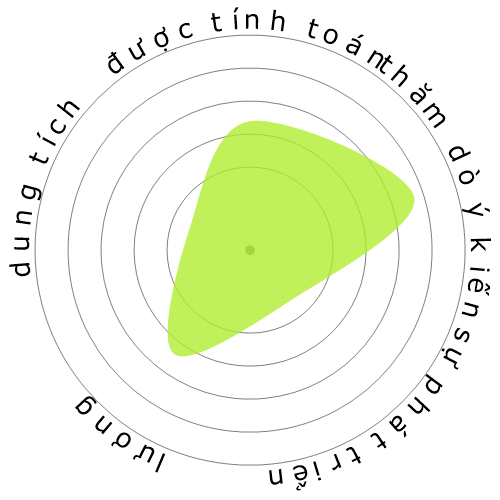
Bông tuyết này thể hiện điều gì?
Bông tuyết là một tổng kết trực quan của năm huy hiệu: Rủi ro Tự động hóa (tính toán), Rủi ro (đánh giá), Tăng trưởng, Lương và Khối lượng. Nó cung cấp cho bạn một cái nhìn tức thì về hồ sơ của một nghề nghiệp. Màu sắc của Bông tuyết liên quan đến kích thước của nó. Càng tốt nghề nghiệp đạt điểm so với những người khác, Bông tuyết càng lớn và màu xanh hơn.
ĐIỂM CÔNG VIỆC
5,5/10
Đây là gì?
Điểm công việc (càng cao càng tốt):

Chúng tôi đánh giá công việc dựa trên bốn yếu tố. Đó là:

- Khả năng bị tự động hóa
- Sự phát triển của công việc
- Mức lương
- Số lượng vị trí công việc hiện có

Đây là một số điều quan trọng cần suy nghĩ khi tìm kiếm công việc.

Người khác cũng đã xem

Nhà thiết kế đồ họa Lập trình viên máy tính Luật sư Nhà phát triển web Kỹ sư cơ khí

Rủi ro tự động hóa đã được tính toán

47% (Rủi ro Trung bình)

Rủi ro Trung bình (41-60%): Những nghề có rủi ro trung bình về tự động hóa thường liên quan đến các công việc hàng ngày nhưng vẫn yêu cầu một số sự phán đoán và tương tác từ con người.

Thêm thông tin về điểm số này, và cách tính nó có sẵn ở đây.

Một số phẩm chất khá quan trọng của công việc khó có thể tự động hóa:

  • Sự sáng tạo

  • Nhận thức xã hội

  • Sự thuyết phục

Cuộc thăm dò ý kiến của người dùng

32% cơ hội để tự động hóa hoàn toàn trong hai thập kỷ tới

Khách truy cập của chúng tôi đã bầu chọn rằng có khả năng thấp công việc này sẽ được tự động hóa. Sự đánh giá này được hỗ trợ thêm bởi mức độ rủi ro tự động hóa đã được tính toán, ước lượng có 47% cơ hội cho việc tự động hóa.

Bạn nghĩ rủi ro của việc tự động hóa là gì?

Khả năng nào mà Nhà Thiết Kế Thương Mại và Công Nghiệp sẽ bị thay thế bởi robot hoặc trí tuệ nhân tạo trong 20 năm tới?

Tình cảm

Biểu đồ sau đây được hiển thị khi có đủ phiếu bầu để tạo ra dữ liệu có ý nghĩa. Nó hiển thị kết quả thăm dò ý kiến của người dùng theo thời gian, cung cấp một chỉ báo rõ ràng về xu hướng cảm xúc.

Cảm xúc theo thời gian (hàng năm)

Sự phát triển

Tăng trưởng chậm so với các ngành nghề khác.

Số lượng vị trí làm việc 'Commercial and Industrial Designers' dự kiến sẽ tăng 3,1% vào năm 2033

Tổng số việc làm, và dự kiến số vị trí tuyển dụng

* Dữ liệu từ Cục Thống kê Lao động cho giai đoạn từ 2023 đến 2033
Dự báo cập nhật sẽ được công bố vào 09-2025.

Lương

Được trả lương cao so với các ngành nghề khác

Tại 2023, mức lương hàng năm trung bình cho 'Commercial and Industrial Designers' là 76.250 $, hoặc 37 $ mỗi giờ

'Commercial and Industrial Designers' đã được trả mức lương cao hơn 58,7% so với mức lương trung bình toàn quốc, đứng ở mức 48.060 $

Lương theo thời gian

* Dữ liệu từ Cục Thống kê Lao động

Dung tích

Phạm vi cơ hội việc làm thấp hơn so với các ngành nghề khác

Tính đến 2023, có 30.810 người được tuyển dụng làm 'Commercial and Industrial Designers' tại Hoa Kỳ.

Điều này đại diện cho khoảng < 0,001% lực lượng lao động có việc làm trên toàn quốc

Nói cách khác, khoảng 1 trong 4 ngàn người được tuyển dụng làm 'Commercial and Industrial Designers'.

Mô tả công việc

Thiết kế và phát triển các sản phẩm công nghiệp, như ô tô, đồ gia dụng, và đồ chơi trẻ em. Kết hợp tài năng nghệ thuật với nghiên cứu về việc sử dụng sản phẩm, tiếp thị, và vật liệu để tạo ra thiết kế sản phẩm hấp dẫn và tiện ích nhất.

SOC Code: 27-1021.00

Bình luận (18)

Để lại bình luận
incandescent_waller (Thấp)
20 thg 9 2024 13:18
The thing more requires originality, something hard for AI to achieve
Özgür Taylan Çelik
20 thg 7 2025 09:49
It is not that hard for AI to understand analogies. That means connecting dots is something doable for AI. Doesn't that mean a creativity?
Ian D. Velázquez (Thấp)
07 thg 8 2023 20:56
AI will never have the social awareness and emocional human understanding to replace an industrial designer
Oscar Humano (Thấp)
18 thg 5 2023 00:16
Parameters and ideas can be shared between humans and robots. Since sensory levels are still predominantly in humans and design is based on sensations and experiences, robots need to feed on human sensations and experiences.
Nicolas
12 thg 2 2023 12:42
I see how many classic "low-level" design tasks can be automated. Design agencies that specialize in the isolated styling of consumer goods for various smaller companies or brands will probably need far fewer employees in the future.

Of course, modern designers work in a multidisciplinary manner and communicate between the various fields of product development. They are not as isolated as the qualities listed above suggest, so I doubt they will become extinct too quickly.

Companies are unlikely to risk their money and reputation on AI wild shots without some form of sentient consideration. Despite this, I bet some will try it anyway, and I am honestly eager to see them succeed.

Advanced creative tasks like innovation management and the expansion of the product portfolio are too important for companies to leave exclusively to tools right now. This job will likely adapt and merge a lot more with engineering and management disciplines.

It is normal for jobs to change with technology.
Zaber (Thấp)
29 thg 1 2023 11:41
Designing industrial products that people use every day is a complex task. It requires a lot of real-world field research, which an AI confined within the boundaries of machines cannot comprehend or execute. In my opinion, AI will certainly be a blessing for industrial designers and others. A vast amount of data can be processed with great insights in a very short amount of time, adding massive value to the work of designers.

However, the human-like quality of AI, like Chat GPT3 and others, is still primitive in capacity, even though their articulation is top-notch, to say the least. Even then, it is not enough to design products at the capacity that humans currently are capable of.

Certain design fields will probably struggle to reduce their dependency on humans, like graphic design, illustrations, and animation design. However, fields like product or industrial design, architecture, and the like are not likely to be replaced any time soon.

For now and in the foreseeable future, I see AI as a personal assistant to industrial designers rather than a threat.
Wnm (Rất có khả năng)
17 thg 12 2022 21:50
AI is as good as its inputs. As more data from the design world is entered, the better AI will become at generating creative solutions and output.
Zhusepe (Ôn định)
05 thg 9 2022 11:02
Recent developments with AI show that it's fully feasible to automate product design.

Given a certain prompt and a starting image, an AI could create thousands of designs, each better than the last one.
Alex (Thấp)
30 thg 8 2022 21:49
Automation will streamline the process for industrial design. So, while companies might hire fewer designers to accomplish the same output of work, the work itself will never be completely automated. This is due to how fundamental the product is to the bottom line of a company's profit.

New CAD tools will optimize and speed up the development process. Consequently, companies will hire fewer employees and expect more from them. This could lead to worker burnout and exploitation becoming even more common, due to the limited staff.

Prospective employees, in addition to having exceptional artistic skills, will also be expected to have proficiency in programming.
Nitin (Không chắc chắn)
11 thg 6 2021 22:48
Industrial design is both about beauty and function. We have tools already that could simulate and rank the functional efficiencies. Data science could play a role in outlining the patterns of large-scale users' likings, which individual designers might not be able to do.
Oscar Os
05 thg 11 2020 20:31
En ingles o español creo que no se entiende que es una profesión que tiene muchos factores que difícilmente se pueden generar algoritmos, el arte a mi parecer es la ultima línea de los algoritmos, el diseño industrial contempla Ciencias y artes. Tan lógico como que cualquiera puede tener una propuesta a muchos requerimientos en la industria. In English or Spanish I think it is not understood that it is a profession that has many factors that it is difficult to generate algorithms, art in my opinion is the last line of algorithms, industrial design contemplates Sciences and arts. As logical as that anyone can have a proposal to many requirements in the industry.
Raúl Palafox
20 thg 5 2020 05:38
industrial design could be developed by robots till the algorithms decide how we should love
Marco (Không có cơ hội)
27 thg 4 2020 15:56
Design is an art, it's subjective, there's no way a machine can replace this job.
Omar
04 thg 3 2021 06:00
What? I know that some of the young graphic designers and some students consider themselves artists but you should know that that isn't art. Some types of design use elements of art, but that doesn't make it art.
w
14 thg 7 2022 12:48
Graphic design isn't the same as industrial design. Yes, it is an art in many ways.

In my humble opinion, it falls under creative technology. It doesn't matter what you are actually designing; you're always going to, in the end, design a new way of living.
the (Thấp)
01 thg 3 2020 02:08
creation of original ideas is one of the few things that I see machines having a hard time doing
Jon (Thấp)
10 thg 12 2019 13:56
Industrial Designers could use robots or design them for automation
Alex
24 thg 6 2020 17:48
not in my home

Để lại phản hồi về nghề nghiệp này
0/8000